Book of Abraham
Pearl of Great Price
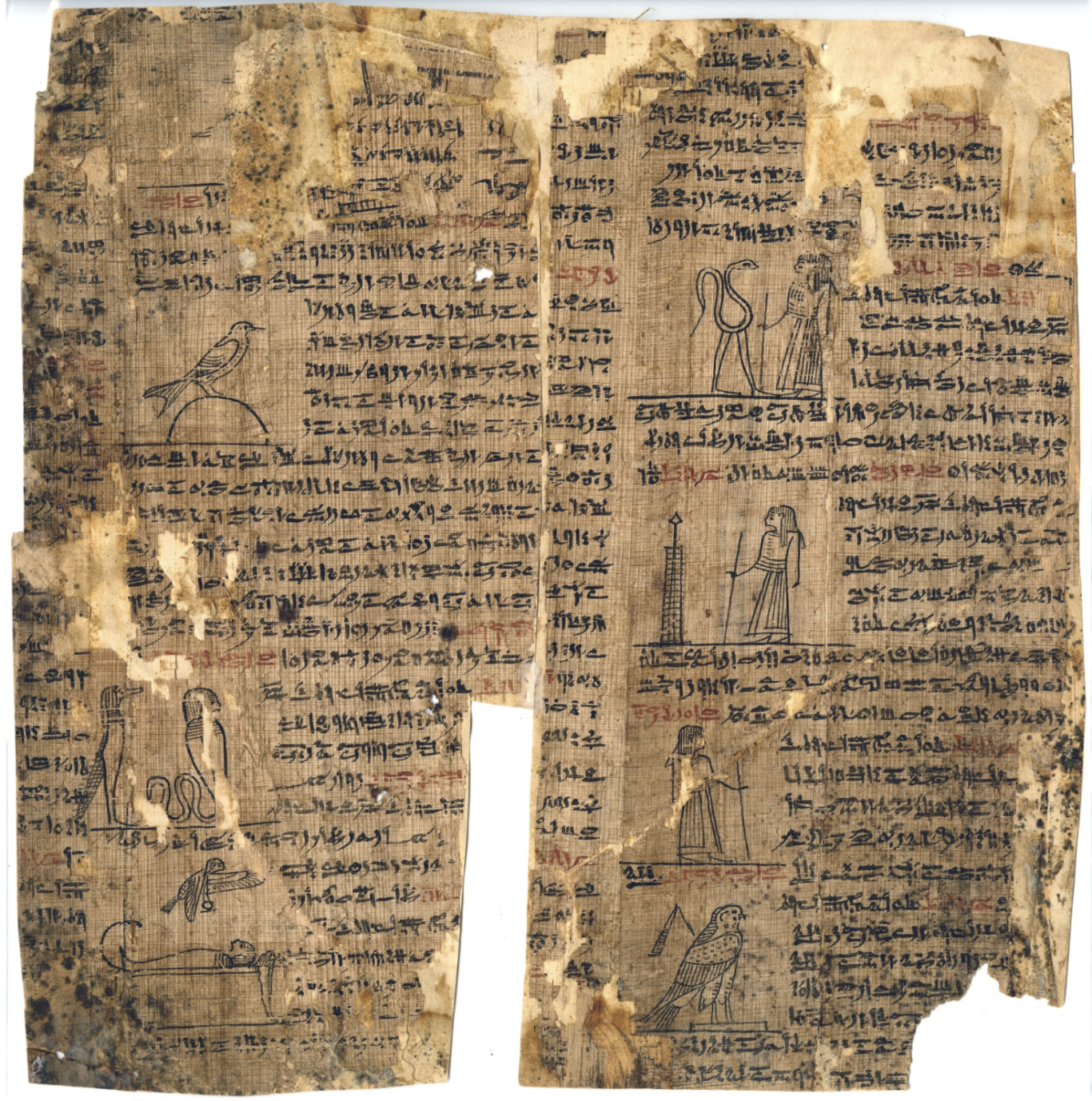
Papyrus Joseph Smith VI | Papyrus Joseph Smith V
Egyptologist dates the Book of Abraham papyri
This is taken from an episode of Mormon Stories with Egyptologist Robert Ritner. Mormon Stories Ep. 1339.
Egyptologist explains the Book of Abraham
According to Egyptologist Robert Ritner, there is no chance that the Book of Abraham is an actual translation of any kind. This is taken from Mormon Stories Episode 1339.
Egyptologist explains the Facsimiles
Taken from Mormon Stories Podcast with Robert Ritner.
A short overview of the Book of Abraham. First published on May 19, 2021.
Church History
Entries Concerning the Book of Abraham
3 July 1835 - Friday
<July 3. Egyptian Mummies.> On the 3rd of July, Michael H. Chandler came to Kirtland to exhibit some Egyptian Mummies. There were four human figures, together with some of the two or more rolls of papyrus, covered with <July 3.> Hieroglyphic, figures and devices. As Mr Chandler had been told that I could translate them, he brought me some of the characters, and I gave him the interpretation, and like a gentleman <6. Certificate of Michael H. Chandler> he gave me the following certificate,
“Kirtland July 6th 1835
“This is to make known to all who may be desirous, concerning the knowledge of Mr Joseph Smith. Junr. in deciphering the Ancient Egyptian Heiroglyphic characters, in my possession, which I have, in many emminent cities, shewed to the most learned: And, from the information that I could ever learn, or meet with, I find that of Mr Joseph Smith, Junr, to correspondent correspondend in the most minute matters.” (signed) “Michael H. Chandler, traveling with, and proprietor of Egyptian Mummies.”
6 July 1835 - Monday
Purchase of the Egypitan Mummies. Soon after this, some of the Saints at Kirtland, purchased the Mummies and Papyrus (a description of which will appear hereafter) and I, with W[illiam] W. Phelps and O[liver] Cowdery, as scribes, commenced <Translation of some of the Characters> the translation of some of the characters or hieroglyphics, and muc to our joy found that one of the rolls contained the writings of Abraham; another the writings of Joseph of Egypt, &c, a more full account <of which> will appear in their place, as I proceed to examine or unfold them. Truly can we say the Lord is beginning to reveal the abundance of peace and truth.
July 1835
<Translating the Book of Abraham &c.> The remainder of this month, I was continually engaged in translating an alphabet to the Book of Abraham, and arranging a grammar of the Egyptian language as practiced by the ancients.
3 October 1835 - Saturday
In the afternoon waited on the twelve most of them at my house and exhibited to them the ancient records in my possession and gave explanation of the same /thus/ <this> /the/ day passed off with the blessings of the Lord
7 October 1835 - Wednesday
This afternoon recommenced translating the ancient records
14 November 1835 - Saturday
[place text]
17 November 1835 - Tuesday
Tuesday 17th exibited <the Alphabet> /some/ of the ancient records to Mr. [Erastus] Holmes and some others, went with him to F[rederick] G. Williams to see the Mumies, /he/ we then took the parting hand, and he started for home, being strong in the faith of the gospel of Christ and determined to obey the requirements of the same.
I returned home and spent the day dictating and comparing letters.
19 November 1835 - Thursday
I returned home and spent the day in translating the Egyptian records: /on/ this has been a warm & pleasant day-
24 November 1835 - Tuesday
Tuesday 24th at home, spent the fore noon, instructing those that called to inquire concerning the things of God, in the last days: in the afternoon, we translated some of the Egyptian, records; I have an invitation to attend a wedding at Cr. Hiram [Hyrum] Smith’s in the evening also to solemnize the matrimonial ceremony…
25 November 1835 - Wednesday
Wednesday 25th spent the day in Translating. -To-day Harvey Redfield & Jesse Hitchcock arrived here from Missourie; <the latter says that he has no doubt, but that a dose of poison was administered to him in a boll of milk but God delivered him>
26 November 1835 - Thursday
Thursday 26th at home, we spent the day in transcribing Egyptian characters from the papyrus. -I am severely afflicted with a cold.
27 November 1835 - Friday
Friday 27th much afflicted with my cold, yet able to be about and I am determined to overcom in the name of the Lord Jesus Christ, -spent the day in reading Hebrew at home.
The weather continues cold and unpleasant. -
*While this entry has nothing to do with the Book of Abraham I felt it fitting to include because Joseph Smith had "spent the day in reading Hebrew" which might be evidence for the Catalyst Theory.
12 December 1835 - Saturday
/Friday/ Saturday morning /11th/ <12th> at home, spent the fore noon in reading, at about 12 oclock a number of young person[s] called to see the /records/ Egyptian records I requested my Scribe to exibit them, he did so, one of the young ladies, who had been examining them, was asked if they had the appearance of Antiquity, she observed with an air of contempt that they did not, on hearing this I was surprised at the ignorance she displayed, and I observed to her that she was an anomaly in creation for all the wise and learned that had ever examined them, without hesitation pronounced them antient, I further remarked that, it was downright wickedness ignorance bigotry and superstition that caused her to make the remark, and that I would put it on record, and I have done so because it is a fair sample of the prevailing spirit of the times showing that the victims of priestcraft and superstition, would not believe though one should rise from the dead.
16 December 1835 - Wednesday
Returned home Elder McLellen [William E. McLellin] Elder B[righam] Young and Elder J[ared] Carted called and paid me a visit, with which I was much gratified, I exhibited and explained the Egyptian Records to them, and explained many things to them concerning the dealings of God with the ancient<s> and the formation of the planetary System, they seemed much pleased with the interview.
17 February 1836 - Wednesday
Wednesday the 17th attend[ed] the school and read and translated with my class as usual, and my soul delights in reading the word of the Lord in the original, and I am determined to pursue the study of languages until I shall become master of them, if I am permitted to live long enough, at any rate so long as I do live I am determined to make this my object, and with the blessing of God I shall succe[e]d to my satisfaction, -this evening Elder Joseph Coe called to make some arrangements about the Egyptian records and the mummies, he proposes to hire a room at J[ohn] Johnsons Inn and exhibit them there from day to day at certain hours, that some benefit may be derived from them -I complied with his request, and only observed that they must be managed with prudence and care especially the manuscripts
6 May 1838 - Sunday
..He also instructed the Church, in the mistories of the Kingdom of God; giving them a history of the Plannets &c. And of Abrahams writings upon the Plannettary System &c….
25 February 1842 - Wednesday
Wednesday 23 Settled with and paid Bro. Chases’ [Ezra Chase’s] -and assisted in the counting room in settling with E[benezer] Robinson Esqr- visited the printing office. & gave R. Hadlock [Reuben Hedlock] instructions concerning the cut for the altar & gods in the Records of Abraham. As designed for the Times and Season
24 February 1842 - Thursday
Thursday 24. attending to business at the general office. P.M. was explaining the Records of Abraham. To the Recorder. Sisters Marinda [Marinda Nancy Johnson Hyde] Mary and others present. To hear the Explanations
2 March 1842 - Wednesday
Wednesday 2. Read the Proof of the “Times and Seasons” as Editor for the First time, No. 9[th] Vol 3rd in which is the commencement of the Book of Abraham. Paid taxes. To Bagley…
4 March 1842 - Friday
March 4 Friday Exhibeting the Book of Abraham. in the original. To Bro Reuben Hadlock [Hedlock]. so that he might take the size of the several plates or cuts. & prepare the blocks for the Times & Seasons. & also gave instruction concerning the arrangement of the writing on the Large cut. illustrating the principles of Astronomy. (in his office) with other general business
8 March 1842 - Tuesday
/Wednesday/ <Tuesday> 8 Commenced Translating from the Book of Abraham, for the 10 No of the Times and seasons—123 and was engagd at his office day & evening—
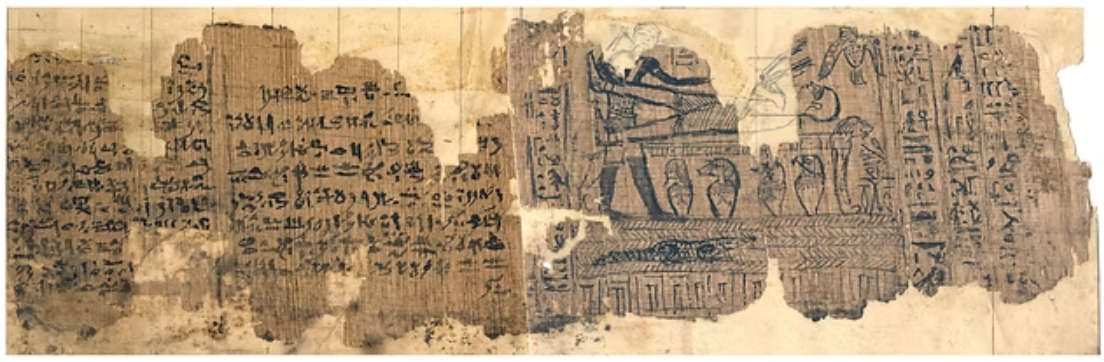
Fragments date to 300-100 C. E.
“None of the characters on the papyrus fragments mentioned Abraham’s name or any of the events recorded in the book of Abraham. Mormon and non-Mormon Egyptologist agree that the characters on the fragments do not match the translation given in the book of Abraham, though there is not unanimity, even among non-Mormon scholars, about the proper interpretation of the vignettes on these fragments. Scholars have identified the papyrus fragments as part of the standard funerary texts that were deposited with mummified bodies. These fragments date to between the third century B.C.E and the first century C.E., long after Abraham lived.”
-LDS Church’s Translation and Historicity of the Book of Abraham Essay
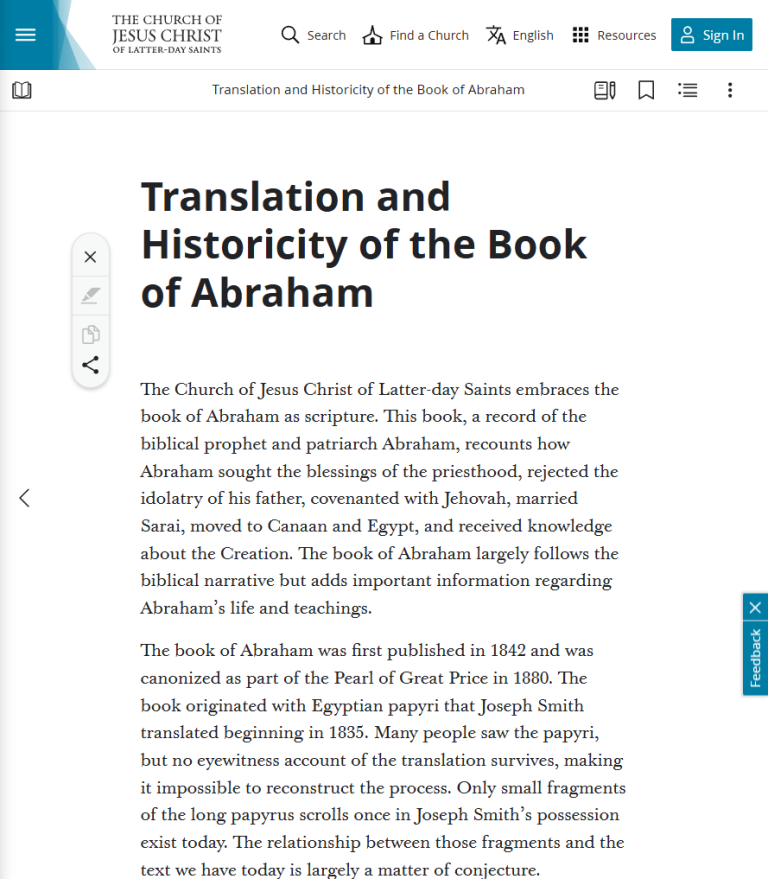
"Some have assumed..."
“Some have assumed that the hieroglyphs adjacent to and surrounding facsimile 1 must be a source for the text of the book of Abraham. But this claim rests on the assumption that a vignette and its adjacent text must be associated in meaning.”
-LDS Church’s Translation and Historicity of the Book of Abraham Essay
However...
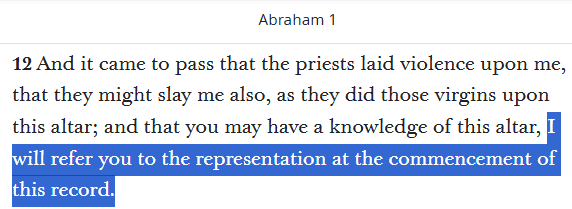
In the Book of Abraham 1:12 it points the reader directly to the facsimile. "I will refer you to the representation at the commencement of this record." The church wants to disconnect the papyrus with the text, but they are connected by Joseph Smith.
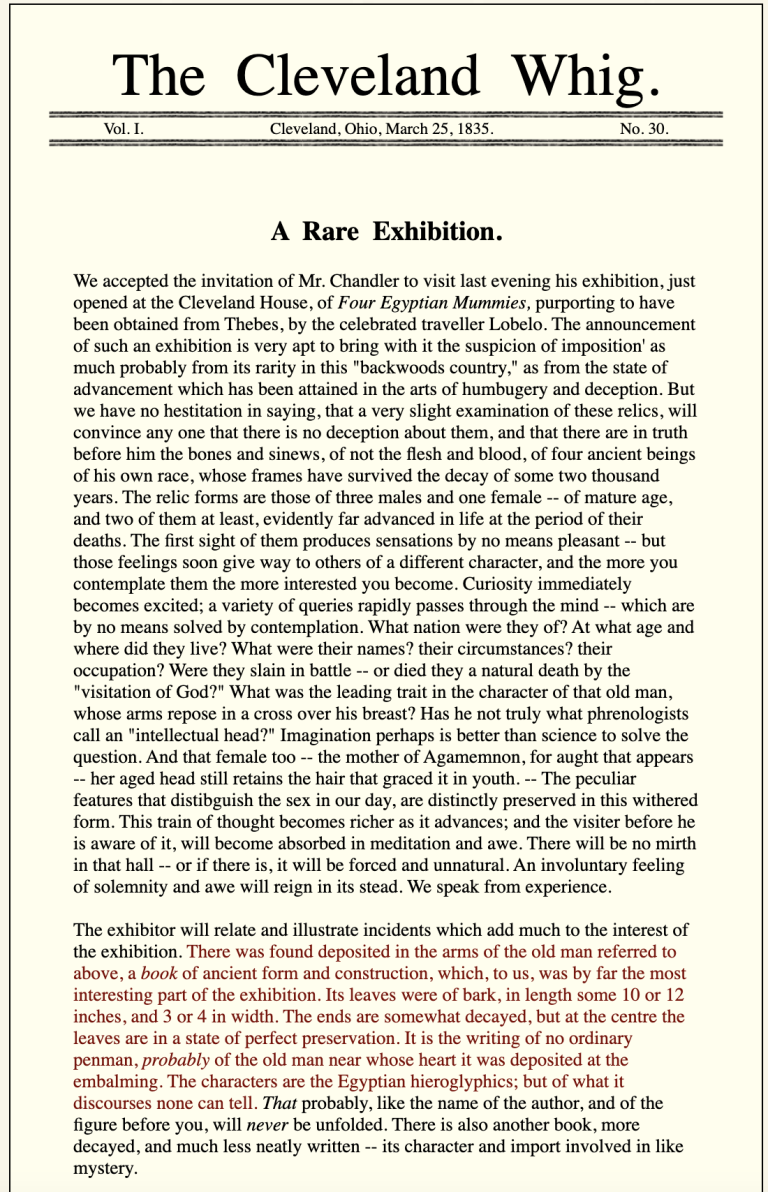
The Cleveland Whig
March 25, 1835
In Cleveland, while Chandler was displaying his mummies, a reporter gave a description of his collection:
We accepted the invitation of Mr. Chandler to visit last evening his exhibition, just opened at the Cleveland House, of Four Egyptian Mummies, purporting to have been obtained from Thebes, by the celebrated traveller Lobelo.
The exhibitor will relate and illustrate incidents which add much to the interest of the exhibition. There was found deposited in the arms of the old man referred to above, a book of ancient form and construction, which, to us, was by far the most interesting part of the exhibition. Its leaves were of bark, in length some 10 or 12 inches, and 3 or 4 in width. The ends are somewhat decayed, but at the centre the leaves are in a state of perfect preservation. It is the writing of no ordinary penman, probably of the old man near whose heart it was deposited at the embalming. The characters are the Egyptian hieroglyphics; but of what it discourses none can tell.
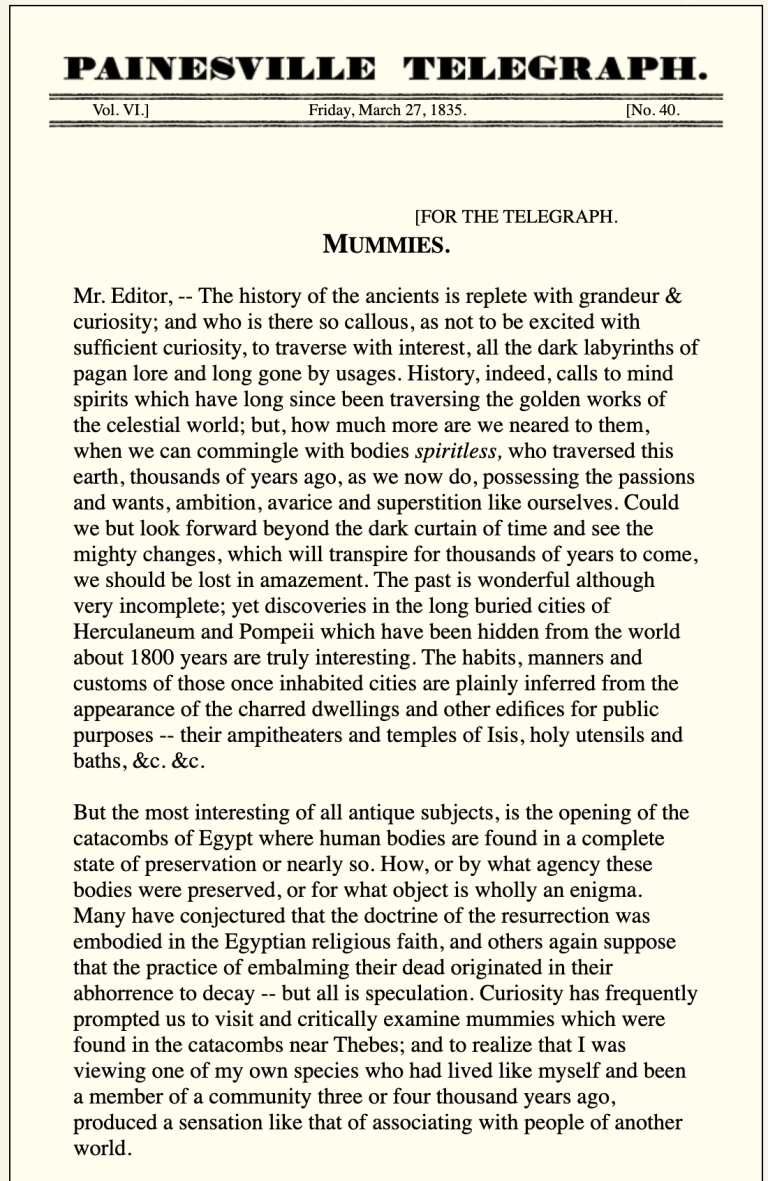
Painesville Telegraph
March 27, 1835
A letter to the editor of the Painesville Telegraph for March 27, 1835 also described Chandler’s collection in depth:
I received a short description from a friend in Cleveland of four mummies that are now exhibiting in that place which may not be uninteresting to some of your readers.
The letter goes on to describe the four mummies and what was found with them….
No. 1. -- 4 feet 11 inches, female -- supposed age 60…There was found with this person a roll or book, having a little resemblance to birch bark; language unknown. Some linguists however say they can decipher 13-36, in what they term the epitaph; ink black and red; many female figures.
No. 2. -- Height 5 ft. 1 1-2 inch; female; supposed age 40. …found with a roll as No. 1, filled with hieroglyphics, rudely executed.
No. 3. -- Height 4ft. 4 1-2. -- Male, very old, say 80…had a roll of writing as No. 1 & 2…
The fourth mummy (Height 4 ft. 9; female) is not described as having any writing buried with it.
Church History
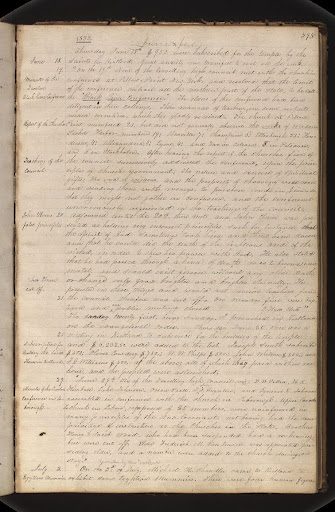
July 3, 1835
3 July 1835 - Friday
<July 3. Egyptian Mummies.> On the 3rd of July, Michael H. Chandler came to Kirtland to exhibit some Egyptian Mummies. There were four human figures, together with some of the two or more rolls of papyrus, covered with <July 3.> Hieroglyphic, figures and devices. As Mr Chandler had been told that I could translate them, he brought me some of the characters, and I gave him the interpretation, and like a gentleman. [History, 1838-1856, volume B-1]
Church History
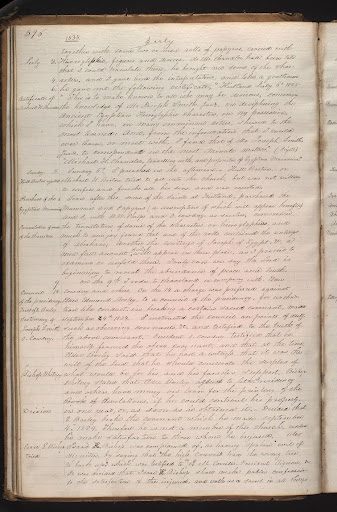
July 6, 1835
6 July 1835 - Monday
Purchase of the Egypitan Mummies. Soon after this, some of the Saints at Kirtland, purchased the Mummies and Papyrus (a description of which will appear hereafter) and I, with W[illiam] W. Phelps and O[liver] Cowdery, as scribes, commenced <Translation of some of the Characters> the translation of some of the characters or hieroglyphics, and muc to our joy found that one of the rolls contained the writings of Abraham; another the writings of Joseph of Egypt, &c, a more full account <of which> will appear in their place, as I proceed to examine or unfold them. Truly can we say the Lord is beginning to reveal the abundance of peace and truth. [History, 1838-1856, volume B-1]
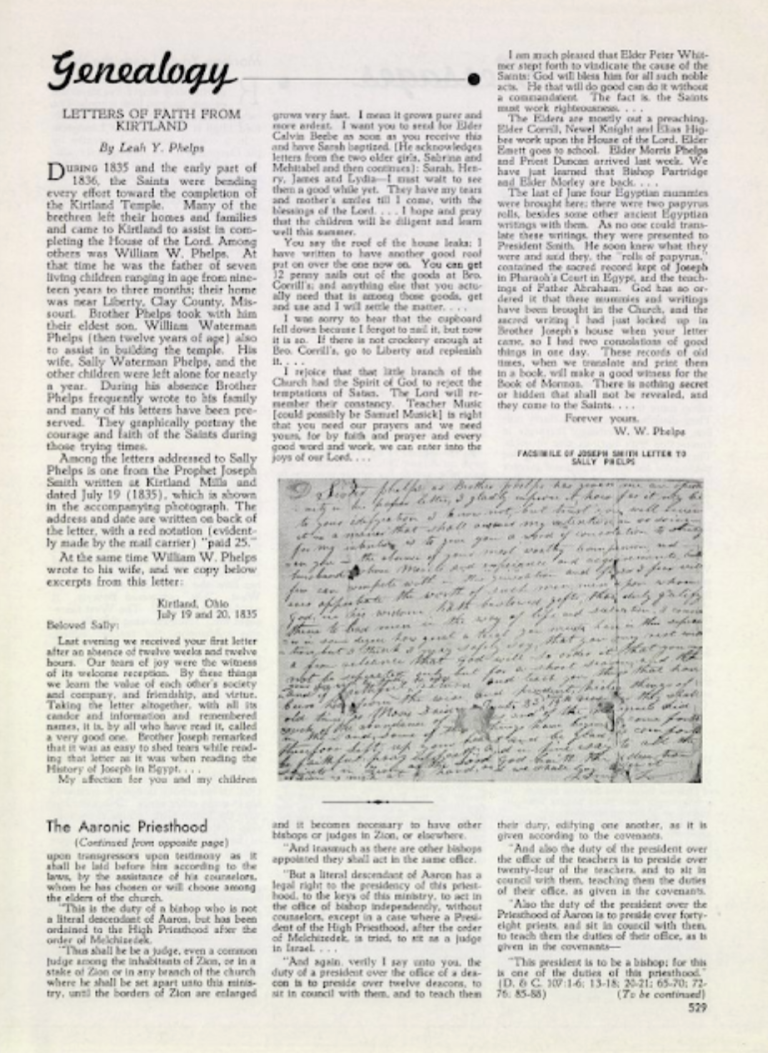
W. W. Phelps Letter
July 20, 1835
In the church’s Improvement Era for August 1942, they published a letter from W. W. Phelps to his wife Sally. It reads in part:
“The last of June four Egyptian mummies were brought here; there were two papyrus rolls, besides some other ancient Egyptian writings with them. As no one could translate these writings, they were presented to President Smith. He soon knew what they were and said they, the "rolls of papyrus," contained the sacred record kept of Joseph in Pharaoh's Court in Egypt, and the teachings of Father Abraham. God has so ordered it that these mummies and writings have been brought in the church, and the sacred writing I had just locked up in Brother Joseph's house when your letter came, so I had two consolations of good things in one day. These records of old times, when we translate and print them in a book, will make a good witness for the Book of Mormon. There is nothing secret or hidden that shall not be revealed, and they come to the Saints....”
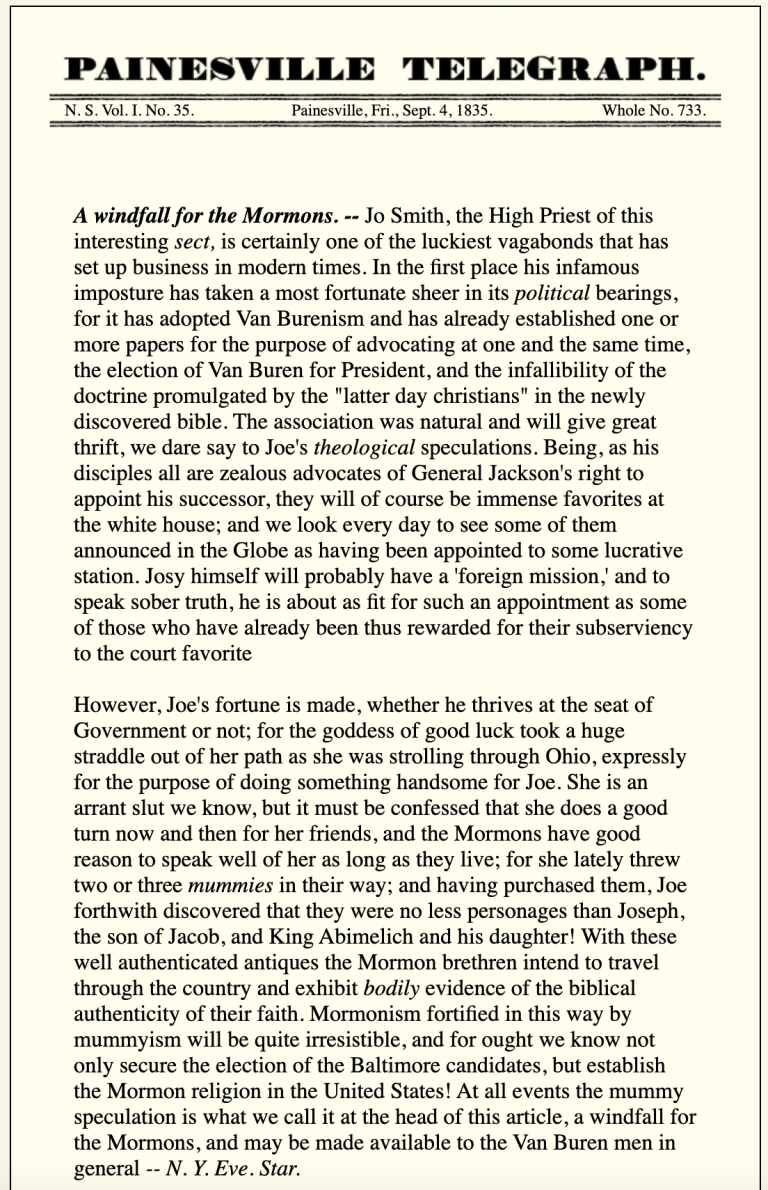
Painesville Telegraph
Sept. 4, 1835
"Jo Smith, the High Priest of this interesting sect, is certainly one of the luckiest vagabonds that has set up business in modern times. ...for the goddess of good luck took a huge straddle out of her path as she was strolling through Ohio, expressly for the purpose of doing something handsome for Joe. She is an arrant slut we know, but it must be confessed that she does a good turn now and then for her friends, and the Mormons have good reason to speak well of her as long as they live; for she lately threw two or three mummies in their way; and having purchased them, Joe forthwith discovered that they were no less personages than Joseph, the son of Jacob, and King Abimelich and his daughter!"
Latter Day Saints'
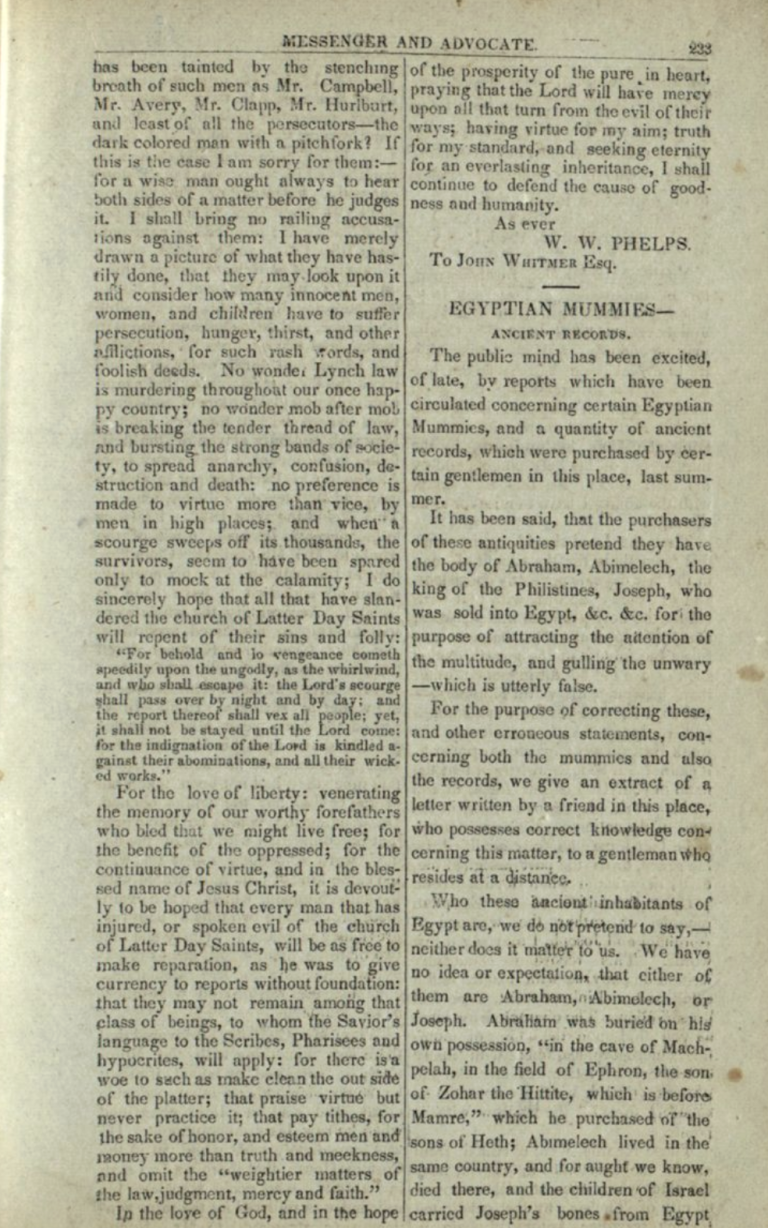
Messenger and Advocate
Vol. 2, No. 3, Dec. 1835
EGYPTIAN MUMMIES--
Ancient Records.
The public mind has been excited, of late, by reports which have been circulated concerning certain Egyptian Mummies, and a quantity of ancient records, which were purchased by certain gentlemen in this palce, last summer.
It has been said, tha the purchasers of these antiquities pretend they have the body of Abraham, Abimelech, the king of the Philistines, Joseph, who was sold into Egypt, &c. &c. for the purpose of attracting the attention of the multitude, and gulling the unwary --which is utterly false.
For the purpose of correcting these, and other erroneous statements, concerning both the mummies and also the records, we give an extract of a letter written by a friend in this place, who possesses correct knowledge concernign this matter, to a gentleman who resides at a distance.
Who these ancient inhabitants of Egypt are, we do not pretend to say, -- neither does it matter to us. We ahve no idea or expectation, that either of them are Abraham, Abimelech, or Joseph. Abraham was buried on his own possession, "in the cave of Machpelah, in the field of Ephron, the son of Zohar the Hittite, which is before Mamre," which he purchased of the sons of Heth; Abimelech lived in the same country, and for aught we know, died there, and the children of Israel carried Joseph's bones from Egypt when they went out under Moses. Consequently, could not have been found in Egypt in the 19th century. But the records are the most important, concerning which, we refer our readers to the extract for information.
"Kirltand, Geauga Co. O.,
December 22, 1835."
Yours of the 8th Oct. furnishes matter of importance. You say truly when you say, "Verily, this is a great and marvelous work, indeed." Others may be endowed with a superior ability to myself, and thereby be the better qualified to appreciate the great condescension of our God in lighting up this earth once more with such intelligence from his presence, by the ministering of his holy angels and by his own voice. Be this as it may, with teh ability I have endeavor to be thankful.
Charlotte Haven
The Overland Monthly
Published Dec. 1890
Letter dated January 3, 1843
What pertains to the Book of Abraham is the only portion of her letter that has been trascribed here:
From there we called on Joseph's mother, passing the site of the Nauvoo House, a spacious hotel, the first floor only laid. It is like the Temple in being erected on the tithe system, and when finished will surpass in splendor any hotel in the State. Here Joseph and his heirs for generations are to have apartments free of expense, and they think the crowned heads of Europe will rusticate beneath its roof. Madame Smith's residence is a log house very near her son's. She opened the door and received us cordially. She is a motherly kind of woman of about sixty years. She receives a little pittance by exhibiting The Mummies to strangers. When we asked to see them, she lit a candle and conducted us up a short, narrow stairway to a low, dark room under the roof. On one side were standing half a dozen mummies, to whom she introduced us, King Onitus and his royal household, -- one she did not know. Then she took up what seemed to be a club wrapped in a dark cloth, and said "This is the leg of Pharaoh's daughter, the one that saved Moses."
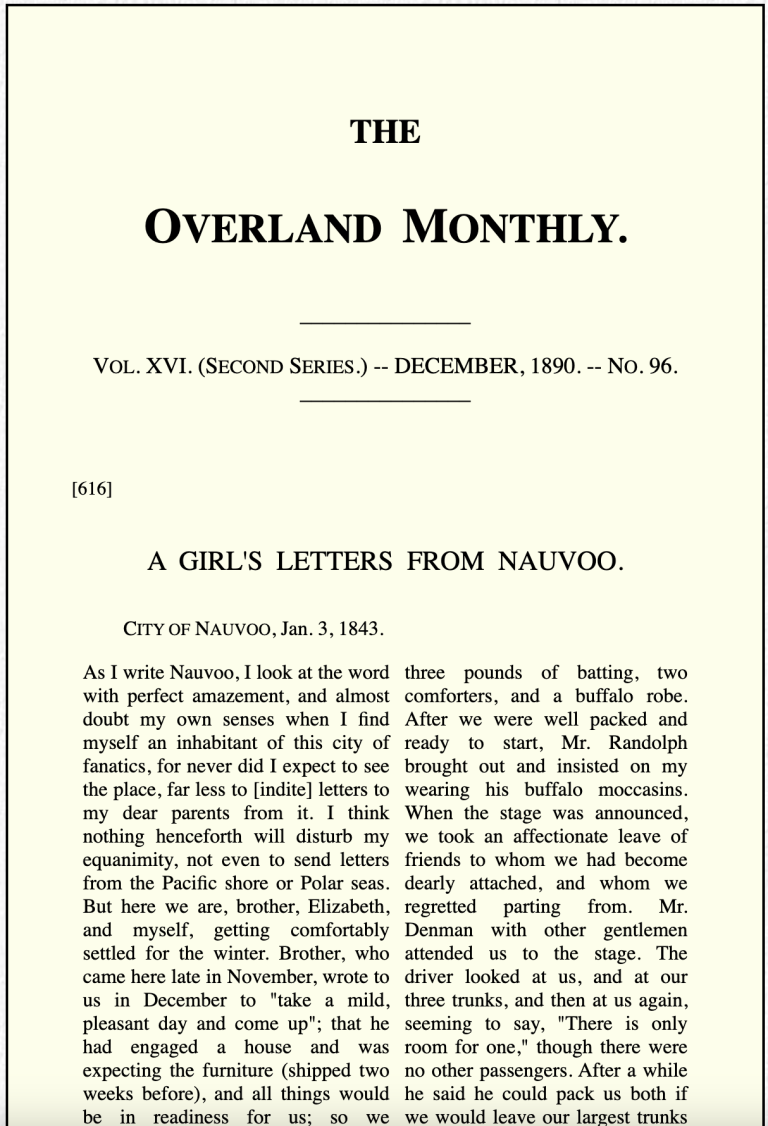
Repressing a smile, I looked from the mummies to the old lady. but could detect nothing but earnestness and sincerity on her countenance. Then she turned to a long table, set her candle-stick down, and opened a long roll of manuscript, saying it was "the writing of Abraham and Isaac, written in Hebrew and Sanscrit," and she read seven minutes from it as if it were English. It sounded very much like passages from the Old Testament -- and it might have been for anything we knew -- but she said she read it through the inspiration of her son Joseph, in whom she seemed to have perfect confidence. Then in the same way she interpreted to us hieroglyphics from another roll. One was Mother Eve being tempted by the serpent, who -- the serpent, I mean -- was standing on the tip of his tail, with which his two legs formed a tripod, and had his head in Eve's ear. I said, "But serpents don't have legs."
They did before the fall," she asserted with perfect confidence.
The Judge slipped a coin in her hand which she received smilingly, with a pleasant, "Come again," as we bade her goodby.
[The Overland Monthly, "A Girl's Letter From Nauv00," Dec. 1890]
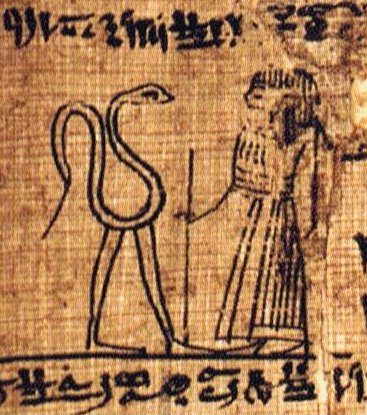
Papyrus
Joseph Smith V
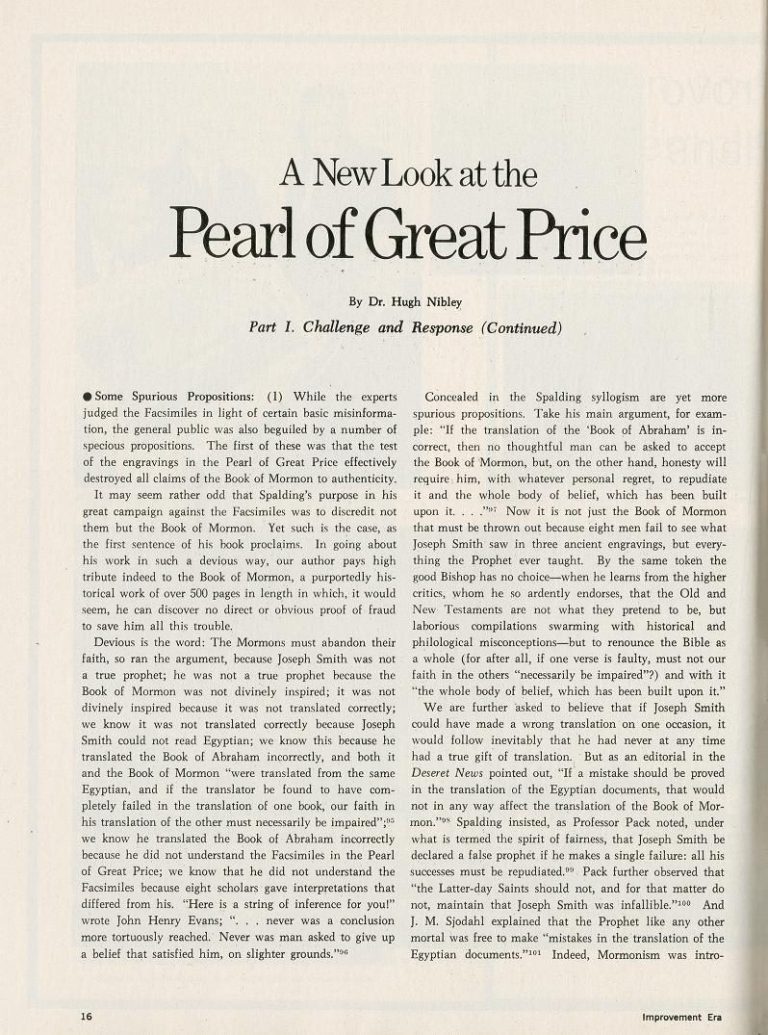
A New Look at the Pearl of Great Price
Improvement Era,
March 1968
Hugh Nibley recalls a story that was shared with him by President Joseph F. Smith who was the nephew of Joseph Smith, Jr.
Joseph F. Smith was born in 1838 and would have only been five years old during this memory.
"President Smith (as Elder Nibley recollected with his remarkable memory) recalled with tears the familiar sight of "Uncle Joseph" kneeling on the floor of the front room with Egyptian manuscripts spread out all around him, weighted down by rocks and books, as with intense concentration he would study a line of characters, jotting down his impressions in a little notebook as he went.
Phase I
Summer 1968
Hugh Nibley, who is the nephew of Joseph F. Smith, later shared this information that is different from his earlier recollection:
"We are told that the papyri were in beatiful condition when Joseph Smith got them, and that one of them when unrolled on the floor extended through two rooms of the Mansion House. Those we have today are mounted on paper showing maps of the Kirtland area, but that suggests that the mounting took palce only after the Kirtland period, when all thought of returning to Kirtland was given up and the precious maps had become waste-paper."
[Hugh Nibley, "Phase I," Dialogue: A Journal of Mormon Though 3/2, (Summer 1968):101]
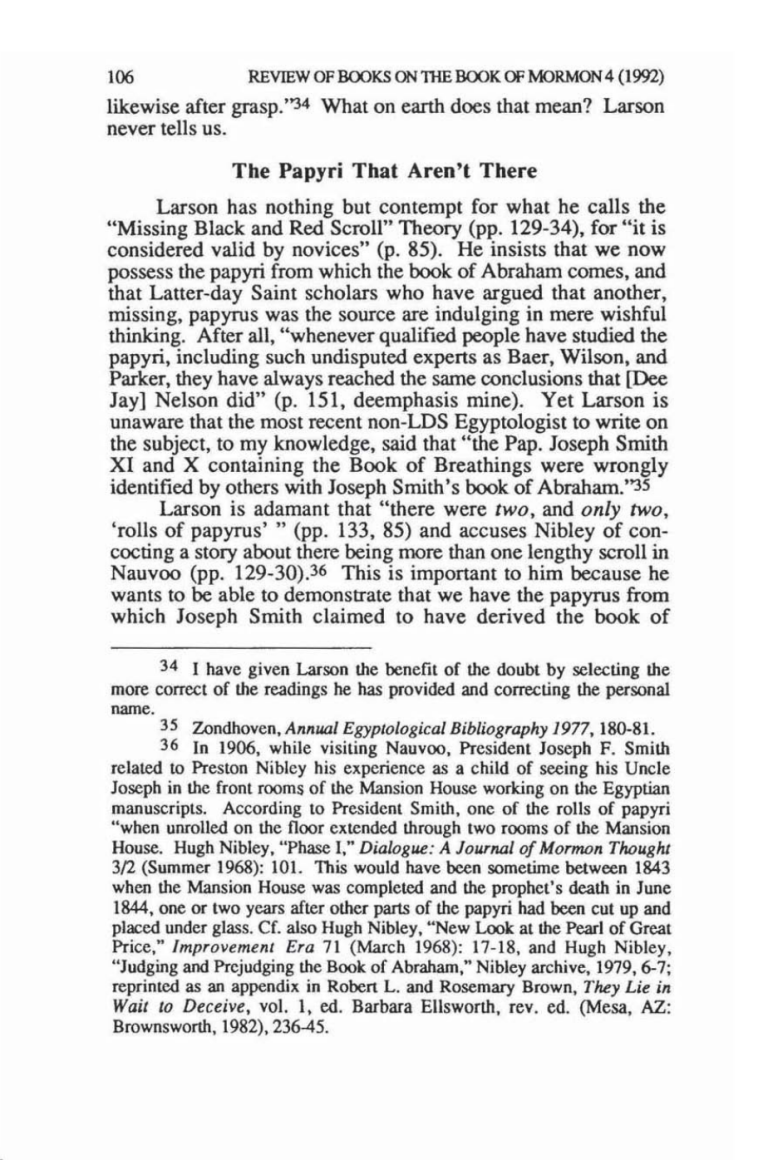
"A Tragedy of Errors"
1992
John Gee does not acknowledge Hugh Nibley's earlier recollection where he does not mention the length of the roll of papyrus.
Footnote 36 reads:
In 1906. while visiting Nauvoo, President Joseph F. Smith related to Preston Niblcy his experience as a child of seeing his Uncle Joseph in the front rooms of the Mansion House working on the Egyptian manuscripts. According to President Smith, one of the rolls of papyri "when unrolled on the noor extended through two rooms of the Mansion House. Hugh Nibley, "Phase I," Dialogue: A Journal of Mormon Thought 3(2 (Summer 1968); 101. This would have been sometime between 1843 when the Mansion House was completed and the prophet's death in June 1844, one or two years after other parts of the papyri had been cut up and placed under glass. Cf. also Hugh Nibley, "New Look at the Pearl of Great Price," Improvement Era 71 (March 1968): 17· 18. and Hugh Nibley, "Judging and Prejudging the Book of Abraham," Nibley archive, 1979,6-7; reprinted as an appendix in Roben L. and Rosemary Brown, They Li~ in Wait to Deceive, vol. I, ed. Barbara Ellsworth, rev. ed. (Mesa, AZ: Brownsworth. 1982).236-45.
Long Scroll/Missing Scroll Theory
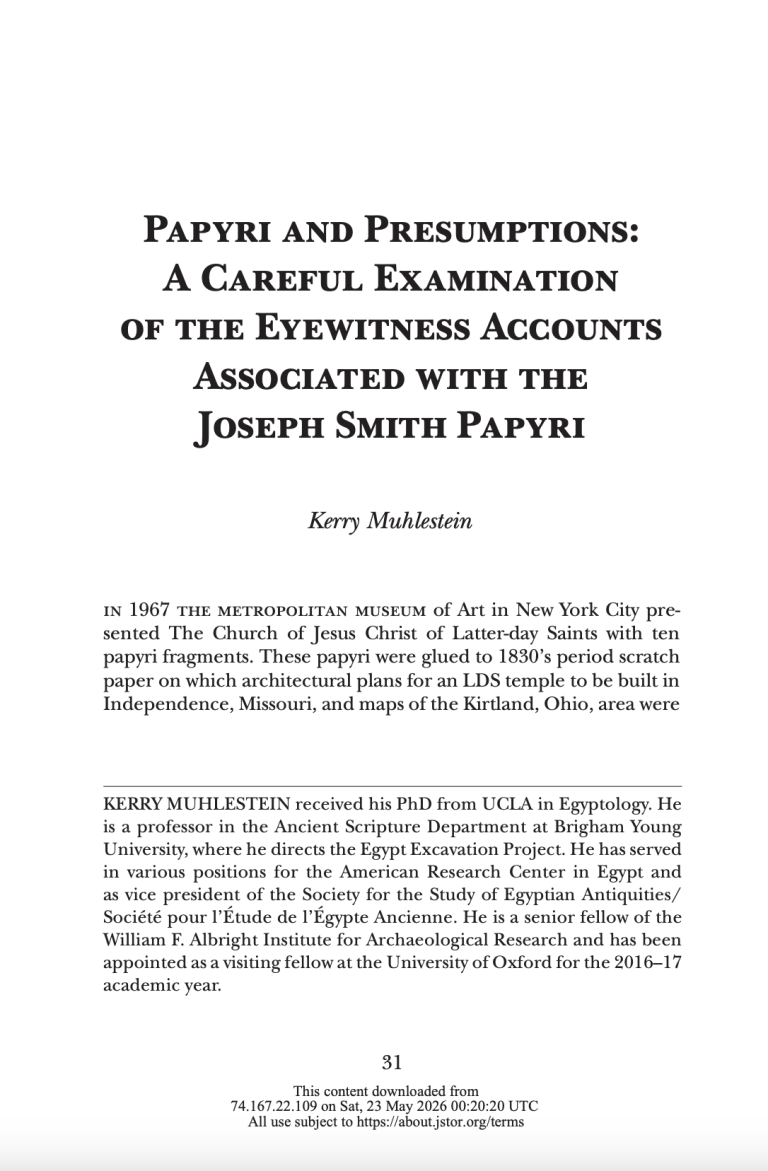
Kerry Muhlestein
2016
In his 2016 paper titled “Papyri and Presumptions” Kerry Muhlestein references eight "eye witness" accounts to support a “long-scroll” theory.
His argument is in two parts. First he hopes that these accounts refer to the long scroll as the source of the Book of Abraham. Second, he contends that the sources sometimes refer to images or drawings that appeared in vignettes that are no longer extant.
Dan Vogel
2021
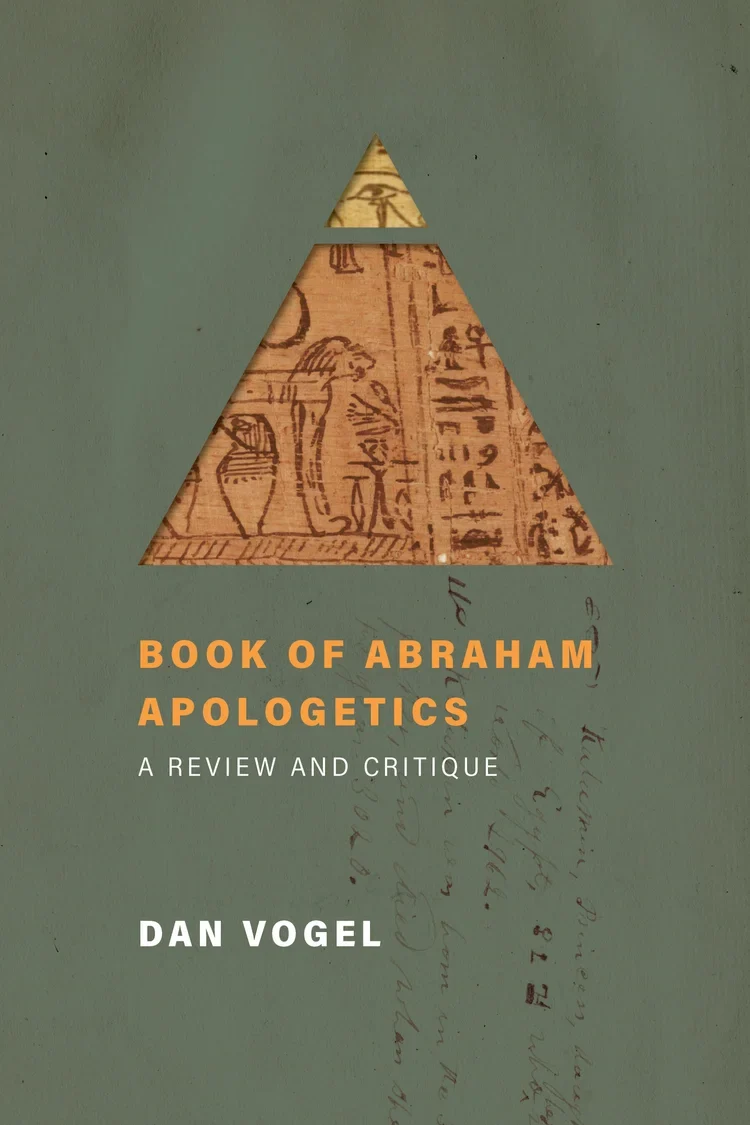
The sources below and the conclusions shared for each of them come from Dan Vogel’s 2021 book titled Book of Abraham Apologetics: A Review and Critique. I recommend this book to anyone wishing to understand the common arguements pertaining to the Book of Abraham.
Henry Tressler
1838/1897
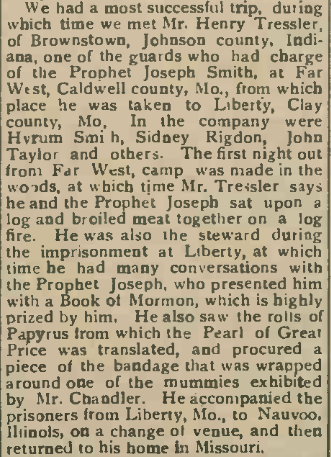
In 1897 the Deseret News published an article where Mormon missionary Foster W. Jones shared an interview he had with Henry Tressler. Tressler’s recalled events that happened in 1838, fifty-nine years previous.
“Mr. Tressler says he and the Prophet Joseph sat upon a log and broiled meat together on a log fire. …He also saw the rolls of Papyrus from which the Pearl of Great Price was translated…” [Foster W. Jones, "The Work in Indiana," Deseret Weekly 55, no. 7 (July 31, 1897): 209]
Muhlestein argues that, “While Tressler’s biographer does not appear to be trying to distinguish between the papyrus fragments and rolls, he is specific that, after having spoken with Joseph Smith about the antiquities, Tressler recounted that the rolls (or scrolls) were the source of the Book of Abraham”
[Muhlestein, 41].
Dan Vogel responded by saying: Who knows what eight-six-year-old Tressler told Mormon missionary Foster W. Jones during a three-hour long interview that Jones briefly summarized? For example, it is unclear if it was Tressler or Jones who connected the “scrolls” (plural) with the Mormon scripture. We do not know what Tressler may have seen or have been told about the Egyptian documents. Perhaps he saw Facsimile 3 on the intact two-foot Hor scroll and made assumptions. He does not distinguish between the mounted fragments and the scrolls as the source of Abraham. Tressler must be more accurately described as a non-witness” [Vogel, 196].
William I. Appleby
1841/1848
“The writings are chiefly in the Egyptian language, with the exception of a little Hebrew I believe. They give a description of some of the scenes in Ancient Egypt, of their worship, their Idol gods &c. The writings are beautiful and plain; composed of red, and black ink. There is a perceptible difference between the writings. Joseph appears to have been the best scribe. There are also representations of men, beasts, Birds, fowls, and oxen attached to a kind of Plough, and a female guiding it, Also: the serpent when he beguiled Eve. He appears with two legs, erect in the form and appearance of man. But his head in the form, and representing the serpent, with his forked tongue extended.”
[William I. Appleby, Autobiography and Journal, May 5, 1841, 71–75, Church History Library, MS 1401]
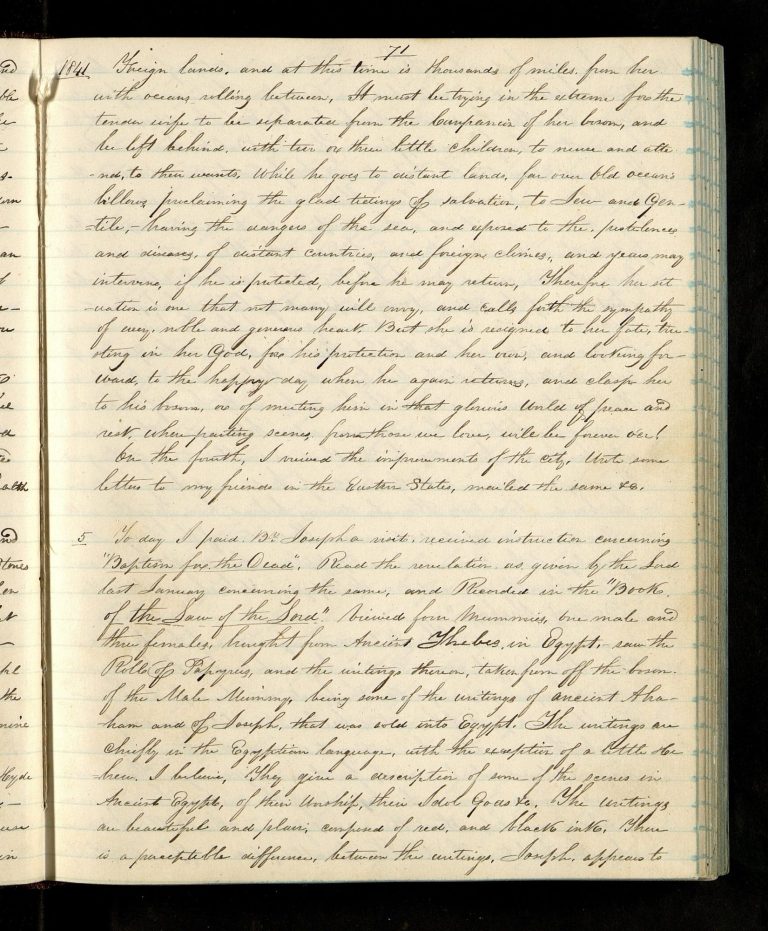
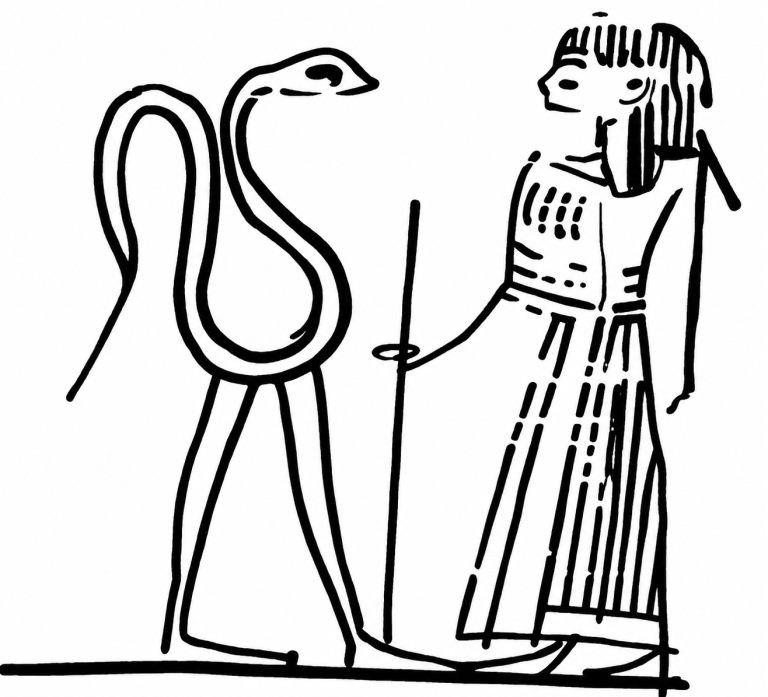
Muhlestein argues that since the image in the on the fragment attributed to Joseph son of Jacob/Israel the serpent’s tongue is not extended that this is a reference to a vignette or scroll that has been lost.
When we consider that when Appleby was probably not looking at the papyri when writing in his journal, his descriptions of the extant documents are reasonably accurate.
Dan Vogel points out that while his journal was dated to 1841, Appleby didn’t not actually write it until 1848 from an earlier version edited and supplemented by the text of the book of Abraham published in the Times and Seasons in 1842.
William Appleby
1841
An earlier account from William Appleby was published in the Christian Observer in London, England on September 10, 1841. He makes no references to the snake with a forked tongue. Dan Vogel suggests that, “Given the lapse of time, the reference to a snake’s forked tongue is just the detail an imperfect memory might supply.” [Vogel, 197].
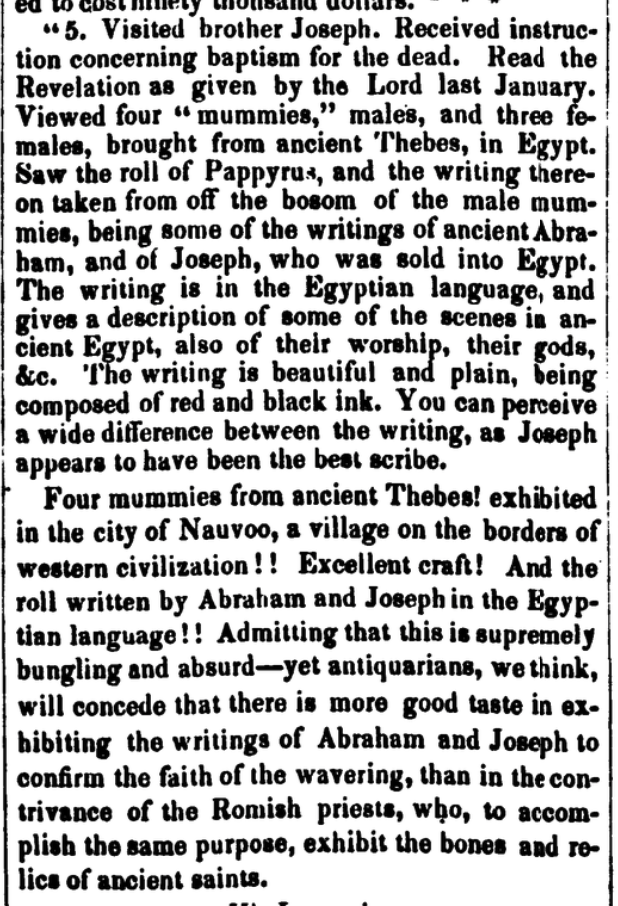
"Visited brother Joseph. Received instruction concerning baptism for the dead. Read the Revelation as given by the Lord last January. Viewed four "mummies," males, and three females, brought from ancient Thebes, in Egypt. Saw the roll of Papyrus, and the writing thereon taken from off the bosom of the male mummies, being some of the writings of ancient Abraham, and of Joseph, who was sold into Egypt. The writing is in the Egyptian language, and gives a description of some of the scenes in ancient Egypt, also of their worship, their gods, &c. The writing is beautiful and plain, being composed of red and black ink. You can perceive a wide difference between the writing, as Joseph appears to have been the best scribe. [William I. Appleby, Journal, 5 May 1841; rep. "Journal of a Mormon," Christian Observer (September 10, 1841): 146]
Charlotte Haven
1843
Shortly after visiting Nauvoo in 1843, Charlotte Haven wrote a letter to her mother, describing her experience. This letter was published in the Overland Monthly in Dec. 1890.
“Madame Smith's residence is a log house very near her son's. She opened the door and received us cordially. She is a motherly kind of woman of about sixty years. She receives a little pittance by exhibiting The Mummies to strangers. When we asked to see them, she lit a candle and conducted us up a short, narrow stairway to a low, dark room under the roof. On one side were standing half a dozen mummies, to whom she introduced us, King Onitus and his royal household, -- one she did not know. Then she took up what seemed to be a club wrapped in a dark cloth, and said "This is the leg of Pharaoh's daughter, the one that saved Moses." [continued..]
“Repressing a smile, I looked from the mummies to the old lady. but could detect nothing but earnestness and sincerity on her countenance. Then she turned to a long table, set her candle-stick down, and opened a long roll of manuscript, saying it was "the writing of Abraham and Isaac, written in Hebrew and Sanscrit," and she read seven minutes from it as if it were English. It sounded very much like passages from the Old Testament -- and it might have been for anything we knew -- but she said she read it through the inspiration of her son Joseph, in whom she seemed to have perfect confidence. Then in the same way she interpreted to us hieroglyphics from another roll. One was Mother Eve being tempted by the serpent, who -- the serpent, I mean -- was standing on the tip of his tail, with which his two legs formed a tripod, and had his head in Eve's ear. I said, "But serpents don't have legs." They did before the fall," she asserted with perfect confidence. The Judge slipped a coin in her hand which she received smilingly, with a pleasant, "Come again," as we bade her goodby. [Charlotte Haven, Letter, Nauvoo Illinois, to her mother, 19 February 1843, in “A Girl’s Letter from Nauvoo,” Overland Monthly (Dec. 1890): 624]
Because Charlotte said that the images came from “another roll” and that the serpent “was standing on the tip of his tail, with which his two legs formed a tripod” when it in fact does not, Muhlestein contends that Haven “is describing scenes that are not on any of the extant papyri” [Muhlestein, “Papyri and Presumptions,” 35].
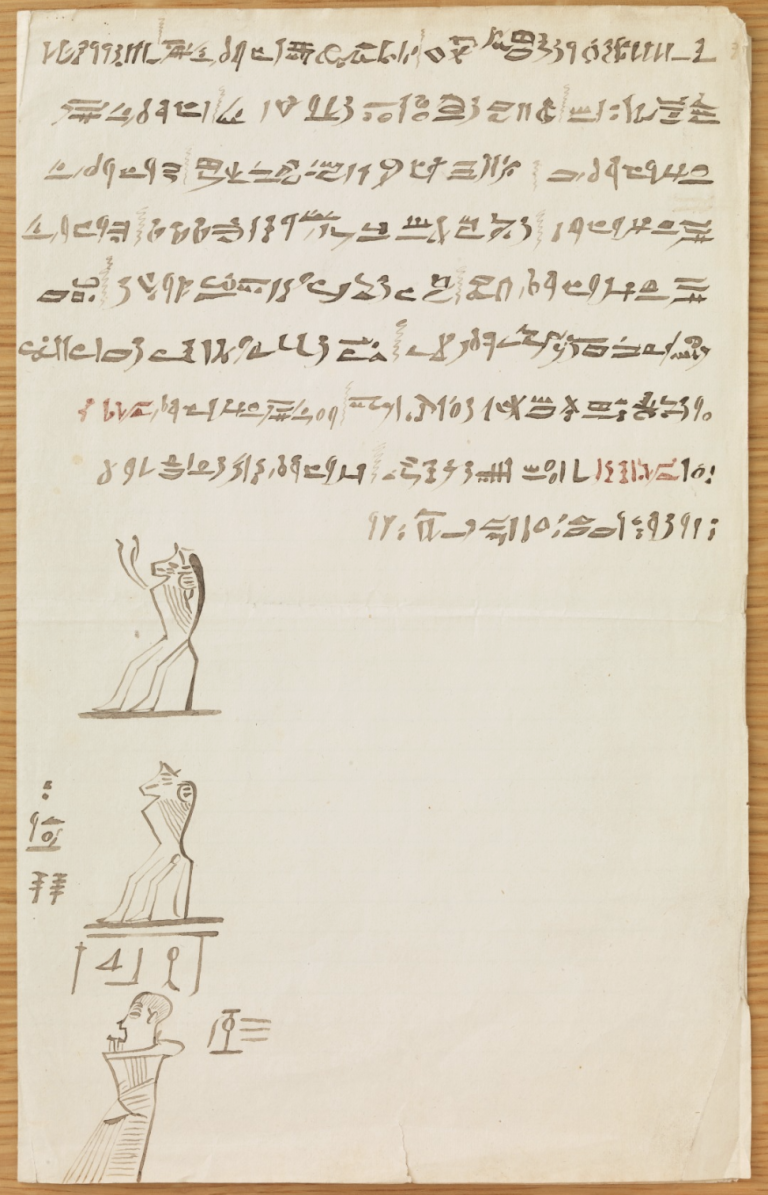
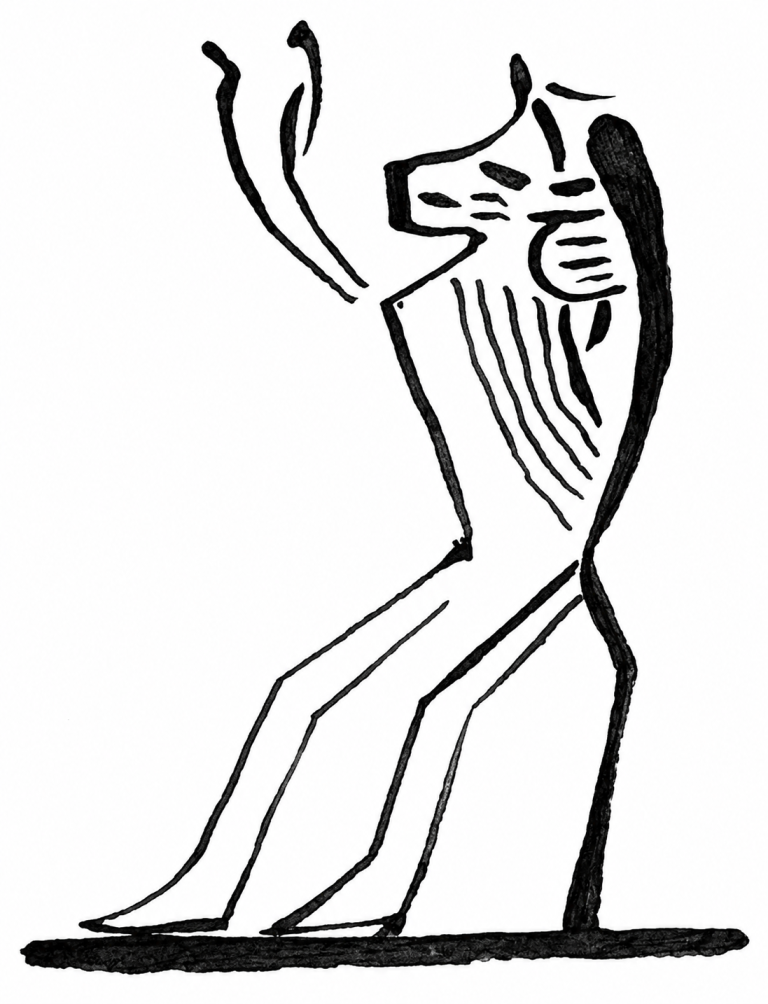
According to Dan Vogel, “Haven evidently combined in her memory the image of the walking snake with the tripod-looking baboon adoring the rising sun, which someone copied onto a folded sheet about July 1835 from a badly damaged portion of Ta-sherit-Min’s Book of the Dead…” [Copies of Egyptian Characters,circa Summer 1835-A]
Benjamin Ashby
1843
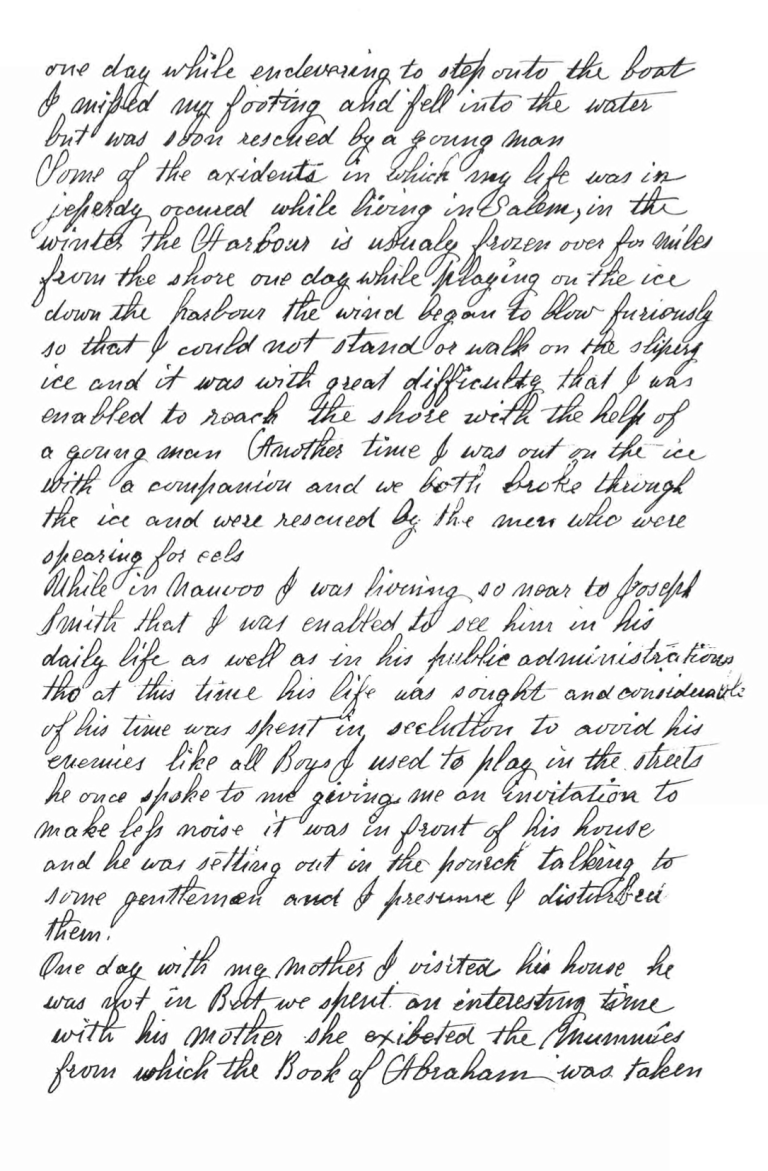
Benjamin Ashby wrote his Autobiography sometime between 1897 and 1904. He would have been only fifteen years old when he saw the papyri. He recalls:
“One day with my mother I visited his house he was not in But we spent an interesting time with his mother she exhibited the mummies from which the Book of Abraham was taken as well as the original papyrus on which it is written.[Benjamin Ashby, Autobiography, typescript, 40, BYU (spelling has been changed); viewable and downloadable from Family Search]
Muhlstein argues: “It is not fully clear but it appears that his reference to ‘the original papyrus’ refers to the long roll as the source, since he does not mention frames to the long roll as the source, since he does not mention frames or slides as is typical when they were exhibited” [Muhlestein, “Papyri and Presumptions,” 44].
Dan Vogel concludes that:
"Benjamin Ashby’s statement is many decades later and is vague. Nothing in his statement can be reasonably construed to mean, as Muhlestein represents, that Ashby “seems to indicate that the long roll, rather than the mounted fragments, was the original source” [Muhlestein, 44]. Ashby is another non-witness" [Vogel, 201].
Unnamed Observer
“M”
1846
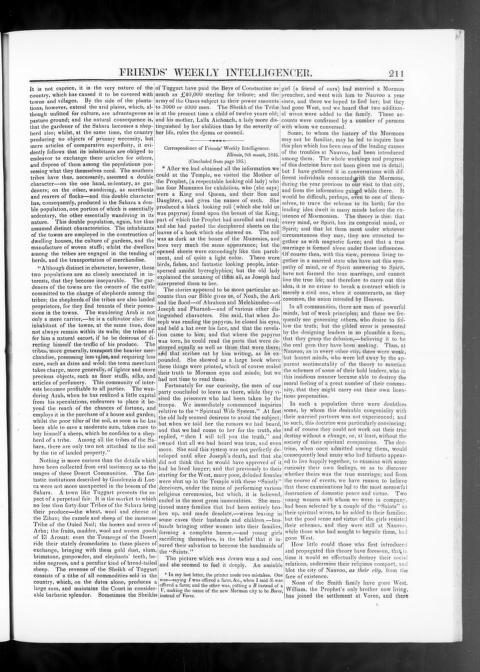
“...we visited the Mother of the Prophet, (a respectable looking old lady) who has four Mummies from exhibition, who (she says) were a King and Queen, and their Son and Daughter, and gives the name of each. She produced a black looking roll (which she told us was papyrus) found upon the breast of the King, part of which the Prophet had unrolled and read; and she had pasted the deciphered sheets on the leaves of a book which she showed us. The roll was as dark as the bones of the Mummies, and bore very much the same appearance; but the opened sheets were exceedingly like thin parchment, and of quite a light color. There were birds, fishes, and fantastic looking people, interspersed amidst hyeroglyphics; but the old lady explained the meaning of them all, as Joseph had interpreted them to her” [M., Letter to Editor, Sept. 1846, in Friends’ Weekly Intelligencer 3/27 (3 Oct. 1846): 211-12].
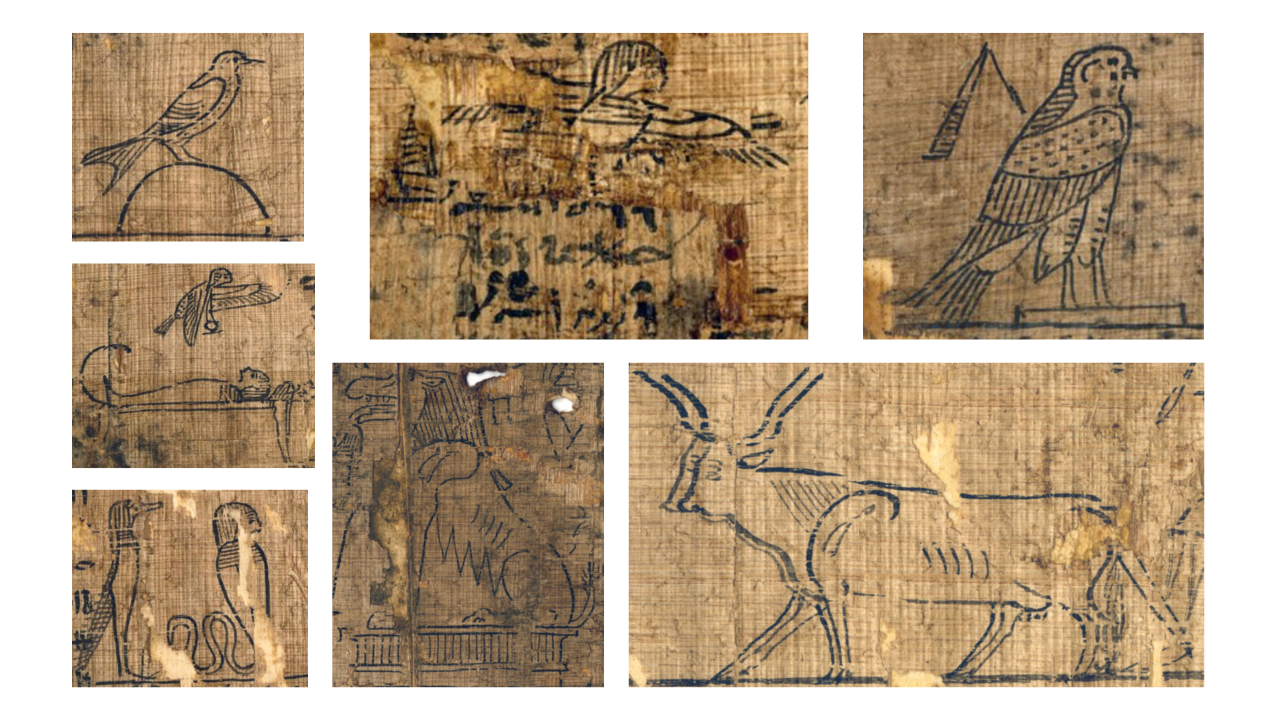
Muhlestein notes that the anonymous observer described “birds, fishes, and fantastic looking people” and that “we have no depictions of fish,” from which Muhlestein infers that the Book of Abraham was on a long scroll, not mounted fragments. However, this source describes what was seen on the “opened sheets,” not on the papyrus roll, and it is possible that the observer was mistaken since he was describing from memory what he had seen” [Vogel, 202].
Jerusha Blanchard
1852-56/1922
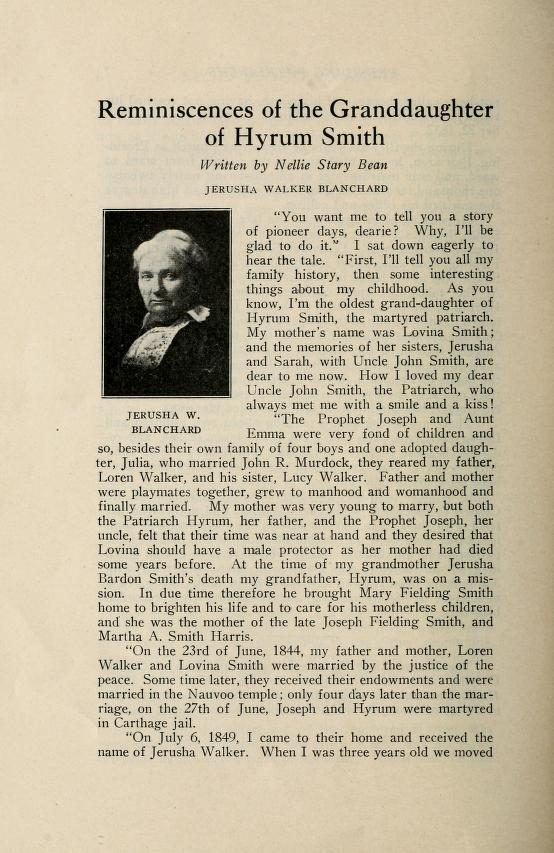
Jerusha W. Blanchard, the granddaughter of Hyrum Smith, said she used to hide in the old cabinet that held the mummies in the early 1850s when she was about five years of age. In recounting her childhood, she described the mummies:
“There were three mummies: The old Egyptian king, the queen and their daughter. The bodies were wrapped in seven layers of linen cut in thin strips. In the arms of the Old King, lay the roll of papyrus from which our prophet translated the Book of Abraham.”
Muhlestein says that: “The account is firsthand regarding the papyri and secondhand regarding the source of the Book of Abraham” [Muhlestein, 46]. Blanchard was only six years old in 1856 when Lucy Smith died and the mummies and papyri were sold to Abel Combs, and her statement was given sixty-six years later, her account provides no support for the missing-papyrus theory.
Joseph Smith III (1898)
1898
In a letter written in 1898, and later published in the Saints Herald in 1899, Joseph Smith III wrote:
“The papyrus from which the Book of Abraham, was said to have been translated by Father, was with other portions found in a roll with some Egyptian mummies, pasted on either paper or linen and put into a small case of flat drawers, some dozen or sixteen in number… Part of the stock, one case of mummies and part or all of the cases of drawers, found their way to Wood’s Museum, Chicago, and a part to St. Louis, where, we never learned. I personally, in company with Elder Elijah Banta, of Sandwich, Illinois, saw the mummies and case of drawers in the museum in Chicago, before the great fire, in 1871; in which they undoubtedly perished with the rest of the accumulated relics and curiosities.” [Joseph Smith III, Letter, Lamoni, Iowa, to Herman C. Smith, Lamoni, Iowa, 24 Oct. 1898, in Saints Herald 46 (11 Jan. 1899)]
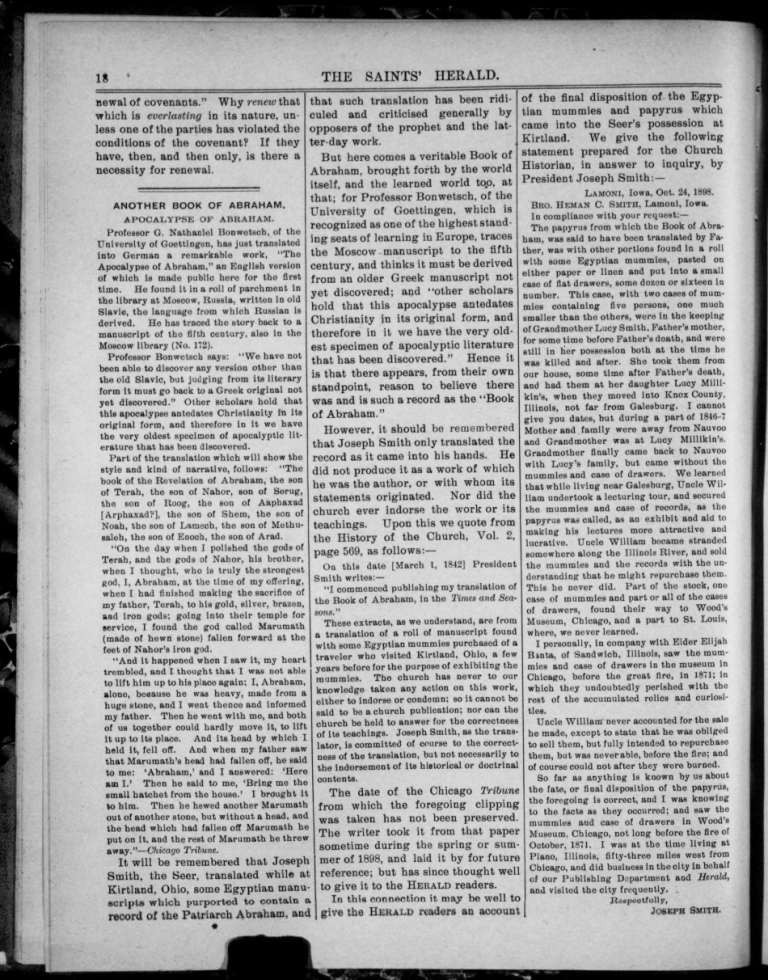
Muhlestein claims that: “Joseph Smith III considered the papyri that burned in the Great Chicago Fire to be the source of the Book of Abraham, not the papyri that remains…Joseph Smith III does not specify that the long roll was the source of the Book of Abraham but does indicate that it was papyrus that we no longer have. [Muhlestein, 47-48].
Dan Vogel explains that: “Joseph Smith III never mentions an intact scroll going to any museum or seeing one in Chicago, but clearly states that the papyrus that produced the Book of Abraham was glued to paper or linen and kept in a “small case of flat drawers.” He assumed “part or all the cases of drawers” containing the source of Abraham followed the mummies to the Chicago Museum and were destroyed in the fire, as did everyone else. Joseph Smith III’s statement does not support the long-scroll theory, but rather refutes it” [Vogel, 204].
Phase I
Summer 1968
Hugh Nibley, who is the nephew of Joseph F. Smith, later shared this information that is different from his earlier recollection:
"We are told that the papyri were in beatiful condition when Joseph Smith got them, and that one of them when unrolled on the floor extended through two rooms of the Mansion House. Those we have today are mounted on paper showing maps of the Kirtland area, but that suggests that the mounting took palce only after the Kirtland period, when all thought of returning to Kirtland was given up and the precious maps had become waste-paper."
[Hugh Nibley, "Phase I," Dialogue: A Journal of Mormon Though 3/2, (Summer 1968):101]
A New Look at the Pearl of Great Price
Improvement Era,
March 1968
Hugh Nibley recalls a story that was shared with him by President Joseph F. Smith who was the nephew of Joseph Smith, Jr.
Joseph F. Smith was born in 1838 and would have only been five years old during this memory.
"President Smith (as Elder Nibley recollected with his remarkable memory) recalled with tears the familiar sight of "Uncle Joseph" kneeling on the floor of the front room with Egyptian manuscripts spread out all around him, weighted down by rocks and books, as with intense concentration he would study a line of characters, jotting down his impressions in a little notebook as he went.
"A Tragedy of Errors"
1992
John Gee does not acknowledge Hugh Nibley's earlier recollection where he does not mention the length of the roll of papyrus.
Footnote 36 reads:
In 1906. while visiting Nauvoo, President Joseph F. Smith related to Preston Niblcy his experience as a child of seeing his Uncle Joseph in the front rooms of the Mansion House working on the Egyptian manuscripts. According to President Smith, one of the rolls of papyri "when unrolled on the noor extended through two rooms of the Mansion House. Hugh Nibley, "Phase I," Dialogue: A Journal of Mormon Thought 3(2 (Summer 1968); 101. This would have been sometime between 1843 when the Mansion House was completed and the prophet's death in June 1844, one or two years after other parts of the papyri had been cut up and placed under glass. Cf. also Hugh Nibley, "New Look at the Pearl of Great Price," Improvement Era 71 (March 1968): 17· 18. and Hugh Nibley, "Judging and Prejudging the Book of Abraham," Nibley archive, 1979,6-7; reprinted as an appendix in Roben L. and Rosemary Brown, They Li~ in Wait to Deceive, vol. I, ed. Barbara Ellsworth, rev. ed. (Mesa, AZ: Brownsworth. 1982).236-45.